
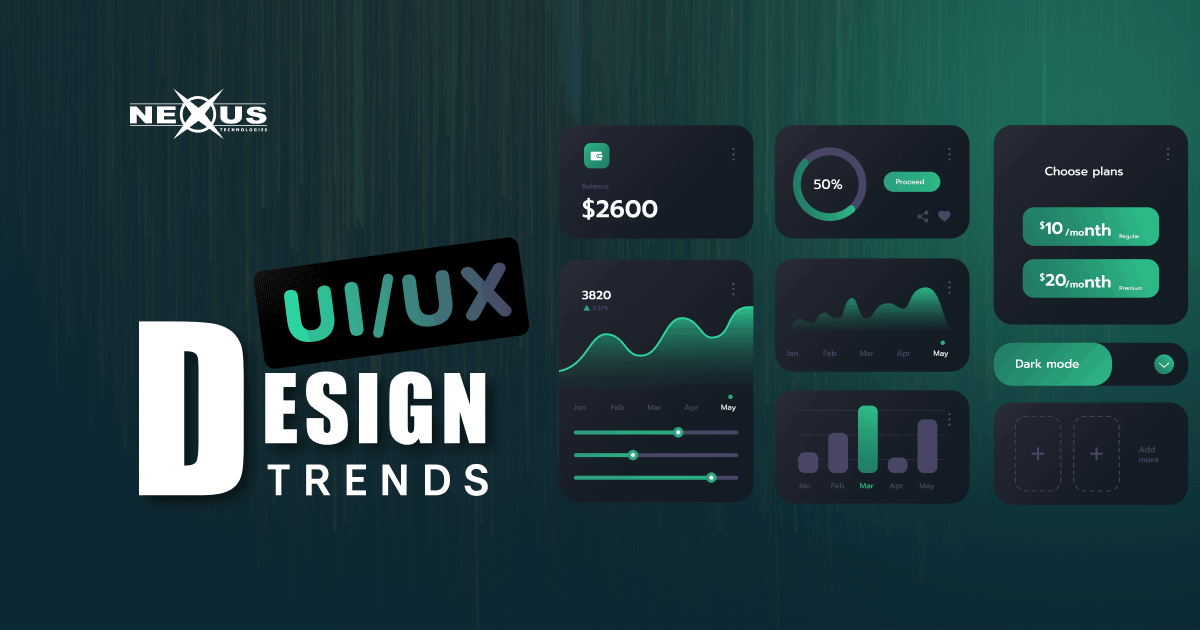
Pakistani businesses spent years treating their websites like digital brochures. A logo, a services list, a contact form. Done. But that mindset is quietly dying, and the companies still running on it are losing customers to competitors with websites that actually feel good to use.
The shift is real and it’s accelerating. Whether you run a textile export company in Faisalabad, an E-Commerce brand in Lahore, or a fintech startup in Karachi, the way your website looks and behaves now has a direct line to how many visitors convert into paying customers. UI/UX design trends that were considered “Western” luxuries two years ago are landing hard in Pakistan’s digital market, and the businesses paying attention are pulling ahead.
Here is what’s actually happening right now.
- AI personalization and fast performance are now must-haves.
- AI personalization and fast performance are now must-haves.
- Local payments (JazzCash, EasyPaisa, BNPL) are critical
- WhatsApp integration boosts engagement and cart recovery.
- SEO and security require ongoing, serious attention.
Why UI/UX Design Trends Matter More in Pakistan Than Ever
Pakistan’s internet user base crossed 130 million in 2024. Mobile internet adoption is up. Competition for attention online is fierce. A slow, confusing, or visually dated website no longer just fails to impress, it actively signals untrustworthiness to users who now have dozens of alternatives one tap away.
Good user experience design is no longer a “nice to have” for local businesses. It’s table stakes.
On top of that, Pakistan’s freelance and agency design talent has matured fast. Figma fluency, motion design skills, and conversion-focused UX thinking are no longer rare. The tools exist. The talent exists. What’s changing now is which design choices are actually moving business metrics in the Pakistani market context.
AI-Assisted Design Layouts Are Arriving in Local Projects
The most visible shift right now is AI entering the design workflow. Tools like Figma’s AI features, Adobe Firefly, and Midjourney are being used by Pakistani designers not to replace judgment but to speed up the early-stage work, moodboards, layout explorations, placeholder imagery.
For businesses, this means faster turnaround on design iterations. A brand that previously waited 3 weeks for a homepage redesign can now review multiple directions in days.
What makes this matter from a UX perspective: AI-assisted layouts tend to be cleaner. They reduce decision fatigue in the design process and often push designers toward more user-friendly structures because the AI tools themselves are trained on high-performing design patterns. The result for Pakistani business websites is less clutter, better visual hierarchy, and faster paths to conversion.
If your current website was built before 2022 and hasn’t been touched since, there’s a strong chance it’s already behind where AI-assisted redesigns are landing. It’s worth reviewing what modern web development solutions look like today against what you currently have.
Micro-Interactions Are Doing the Heavy Lifting on Trust
Micro-interactions are the small animations and feedback cues that respond to what a user does. A button that shifts slightly when hovered. A form field that gently highlights when clicked. A loading spinner that keeps users oriented during a wait.
These details feel minor. They are not.
Research from Nielsen Norman Group consistently shows that users interpret these small signals as quality indicators. A website that responds to your actions feels built by people who cared. A website that doesn’t feels static and unfinished. In the Pakistani market, where trust is often the conversion barrier rather than price, this difference matters a lot.
E-commerce businesses, financial services portals, and B2B service providers in Pakistan are increasingly investing in micro-interaction design as part of their website refresh projects. It’s one of the higher ROI investments in the current UI/UX design trends cycle because it upgrades perceived quality without a full redesign.
Mobile-First Is Now Mobile-Only for Most Pakistani Users
Pakistan’s smartphone penetration means the majority of your website’s visitors are on mobile. The “mobile-first” design philosophy, designing the mobile version of a site before the desktop, has been discussed for years. What’s changed is that many Pakistani businesses are now treating mobile as the primary version, full stop.
This has practical implications for layout decisions. Navigation menus that work beautifully on desktop (multi-column dropdowns, hover states) become unusable friction on a 6-inch screen. Long form pages that read well on desktop feel endless on mobile. Button sizes that looked fine in a browser mock-up are impossible to tap accurately on a phone.
The current design trend here is toward what’s called “thumb-friendly UX” placing key actions within the natural reach zones of a user’s thumb, reducing scrolling distance to important content, and cutting any UI element that doesn’t earn its space on a small screen.
If you’re also running a mobile application alongside your web presence, this principle carries directly across. Mobile app development built with the same thumb-friendly UX logic creates a much more consistent brand experience across every touchpoint your customers use.
Dark Mode and Contextual Color Schemes
Dark mode support has graduated from a developer novelty to a genuine user expectation. Around 80% of smartphone users in countries with high mobile usage now have dark mode enabled at the OS level. Pakistani users are no different.
But the design trend here is more nuanced than just offering a dark version of your interface. The better-performing websites are now using contextual color schemes, interfaces that subtly adapt based on time of day, user preference, or content context. A news portal that shifts warmer in the evening. A health platform that uses softer tones for wellness content vs. clinical urgency tones for emergency information.
For local businesses, the practical entry point is simply ensuring your website looks correct and readable in dark mode. Many Pakistani sites built on older templates break visually when viewed in dark mode, images lose contrast, text becomes illegible, branded colors look wrong. Fixing this is low-hanging fruit that improves user experience immediately.
Minimalism With Local Visual Identity
There’s a tension in Pakistani web design that the best agencies are navigating well right now: global minimalism vs. local brand expression.
The international design trend pushes toward clean, sparse layouts, lots of white space, and restrained typography. That approach performs well for readability and conversion. But Pakistani businesses often have rich visual identities, vibrant brand colors, dense cultural references, highly relationship-oriented brand voices, that don’t always translate into a stripped-back Western aesthetic.
The emerging solution is structured minimalism with local warmth. Clean layouts that use cultural color signals deliberately. Typography choices that communicate professionalism while remaining readable in Urdu/English bilingual contexts. Photography and illustration styles that reflect actual Pakistani contexts rather than stock imagery of people who clearly aren’t local.
This is genuinely one of the more interesting UI/UX design trends for the Pakistani market because it requires local expertise. A global design template can’t capture it. You need designers who understand both the UX principles and the cultural context. This is also where getting the web development solutions right from a local provider makes a measurable difference compared to off-the-shelf themes.
Speed as a UX Principle, Not Just a Technical Metric
Page load speed has always been a technical concern. What’s shifted is that it’s increasingly understood as a design decision too.
Every element a designer adds to a page, hero videos, layered animations, large image galleries, embedded social feeds, has a load cost. Pakistani mobile users on 4G connections are often on networks with variable speed. A website that loads in 2 seconds for a user on fiber in DHA Lahore loads in 6+ seconds for someone on a patchy connection in Multan. Your potential customer base covers both.
The UI/UX design trend that addresses this is called performance-aware design. It means designers working in close coordination with developers to make visual choices that achieve the intended impact without unnecessary load weight. Lazy loading, next-gen image formats (WebP), system font stacks, and CSS animations instead of JavaScript-heavy interactions are all part of this.
For Pakistani businesses that want to reach customers beyond the major urban centers, this approach to UX isn’t optional, it’s the difference between being accessible or being invisible.
A solid web hosting foundation matters here too. Even perfectly optimized design files will underperform on slow, shared infrastructure that can’t deliver content quickly.
Accessibility Is Becoming a Competitive Differentiator
Accessibility in web design means building interfaces that work for users with visual, motor, or cognitive differences. Screen reader compatibility, sufficient color contrast ratios, keyboard navigation support, and clear error messaging for forms.
This is underinvested in Pakistan right now. Most local business websites fail basic accessibility checks. But there are two reasons this is becoming commercially important, not just ethically correct.
First, accessibility improvements overlap significantly with general UX improvements. A form that’s easy to complete with a keyboard is a form that’s easy to complete on a mobile touchscreen. Alt text on images helps visually impaired users and helps Google understand your content. High contrast text benefits users in bright sunlight, which describes anyone using a phone outdoors in Pakistan. These aren’t niche improvements. They help everyone.
Second, as Pakistani businesses increasingly work with international clients, accessibility compliance (WCAG 2.1 standards) is appearing in procurement requirements. Building it in now is simpler than retrofitting it later.
You can review web development add-on services that cover accessibility audits and performance improvements as part of your next site iteration.
Conversion-Led UX — Designing for the Decision
The most commercially meaningful shift in UI/UX thinking right now is the move from “beautiful website” to “website that converts.”
Pakistani businesses are becoming more data-literate about what their websites actually produce. Analytics tools, heatmaps, session recordings, these are getting used more regularly, and the data they return is forcing a rethink of design priorities. The beautiful hero image that visitors scroll past in 0.3 seconds. The contact form that gets abandoned 70% of the way through. The product page that generates traffic but no inquiries.
Conversion-led UX design starts with those questions: where are users dropping off, why are they confused, what would make the next step obvious? The design work then addresses specific drop-off points rather than trying to make the whole site look more impressive.
This approach pairs well with the essential elements of good website design, it’s not about decoration but about removing friction between a visitor’s intent and the action that serves them. Our own breakdown of essential elements of a modern website design covers the structural foundations this approach builds on.
What Pakistani Businesses Should Do With This
If you’re reviewing your website in 2025, here’s how to think through it practically:
Audit before you redesign: Pull your analytics. Find the pages with high traffic and low conversion. Those are your UX problems, not your design problems.
Mobile first, genuinely: Open your website on your actual phone, on a mid-range Android device, on a 4G connection. That is the experience most of your visitors have.
Pick two or three of these trends, not all eight: The businesses getting the most out of current UI/UX design trends are the ones implementing a few things well, not trying to do everything at once.
Work with people who understand Pakistani users: Design trends arrive from the West, but applying them to a Pakistani business website requires local market understanding. A design that performs well for a SaaS startup in San Francisco needs adaptation to work for an importer in Sialkot.
FAQs
What are the most important UI/UX design trends for Pakistani businesses in 2025?
The trends with the highest practical impact right now are mobile-first (thumb-friendly) UX, micro-interactions, performance-aware design, and conversion-led UX thinking. These directly affect how visitors experience your site and whether they take action.
How much does a UX-focused website redesign cost in Pakistan?
It varies significantly by scope. A conversion-focused redesign of an existing site typically ranges from PKR 50,000 to PKR 300,000+ depending on complexity, number of pages, and whether new development is involved. Incremental improvements, adding micro-interactions, fixing mobile issues, improving form UX, often cost less than full redesigns.
Is dark mode support necessary for my Pakistani business website?
If your audience is primarily mobile users (which it likely is), dark mode compatibility is worth addressing. Many older site templates display broken or unreadable in dark mode. It’s usually a straightforward fix with a noticeable positive impact on mobile user experience.
What is the difference between UI and UX design?
UI (User Interface) design covers the visual layer colors, typography, buttons, icons, and how elements look. UX (User Experience) design covers the logical layer, how users move through a site, how interactions are structured, and whether the journey from landing to action is smooth. Both matter, and the best websites address them together.
Do I need a separate mobile app, or should I invest in a better mobile website first?
For most Pakistani businesses, improving the mobile website experience delivers faster ROI than building a dedicated app from scratch. Apps are worth the investment when your users engage frequently (daily or weekly). For most business websites, a fast, mobile-optimized website is the right starting point. If you’re at the stage where an app makes sense, mobile app development built with the same UX principles as your website creates the most consistent customer experience.
How do UI/UX design trends affect my website's Google ranking?
Google uses Core Web Vitals, which measure load speed, visual stability, and interactivity, as ranking signals. Good UX design practices (faster load times, reduced layout shift, smooth interactions) directly improve these scores. Accessibility improvements also help Google crawl and understand your content better.
Can I add UX improvements to my existing website without a full rebuild?
Yes, in most cases. Micro-interactions, mobile layout fixes, form UX improvements, page speed optimizations, and accessibility adjustments can all be applied to existing sites without starting over. A phased approach, fixing the highest-impact issues first, is often more practical than waiting for a full redesign budget.
Nexus Technologies has been delivering web development, UX design, and hosting solutions to Pakistani businesses since 1998. If you’re ready to review your current website’s design and performance, our team can walk you through what’s worth improving first.